Posts By :

Pentagram Team

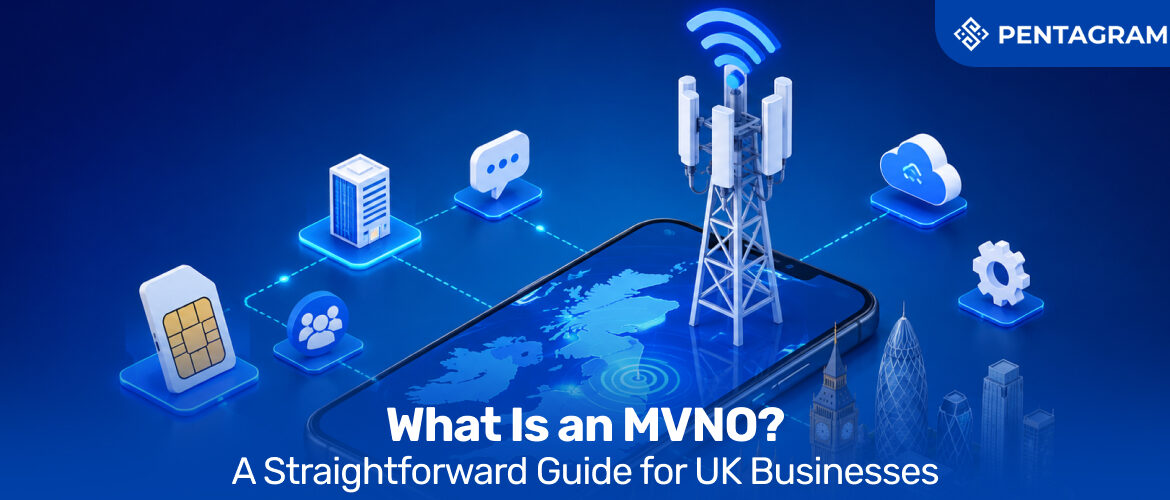
What Is an MVNO? A Straightforward Guide for UK Businesses
What Is an MVNO? A Straightforward Guide for UK Businesses 1024 427 Pentagram Team

What Is an MVNO? A Straightforward Guide for UK Businesses

If you’ve been comparing business mobile plans lately, you’ve probably run into the term without ever getting a clear answer to the obvious question: What is MVNO exactly, and why does it keep coming up? In plain terms, it’s a mobile provider that sells connectivity over someone else’s network instead of building its own towers, masts, and spectrum. That one distinction shapes almost everything else — pricing, flexibility, how fast a provider can adapt, and how much control you actually get over your own connectivity. This guide walks through how the model works, where it earns its keep for businesses, and what separates a provider worth trusting from one that’s simply reselling a SIM card. Keep reading, as the details below could save you a genuinely expensive mistake.

The Term Frequently Used But Rarely Explained

MVNO stands for mobile virtual network operator. Strip away the acronym and the idea is fairly simple: a company that offers mobile plans, SIMs, and network access without owning the physical infrastructure that carries the signal. Instead, it leases capacity from a mobile network operator (MNO) from one of the handful of companies that actually own masts, spectrum licences, and core network equipment and repackages that access under its own brand, pricing, and customer experience.

You’ll sometimes see this written the other way round, as a mobile network virtual operator, though it means the same thing. Either way, the business behind your SIM card doesn’t need to spend billions building physical infrastructure. It buys wholesale access and focuses on everything that sits on top of it: service design, billing, support, and the specific features a particular type of customer actually wants.

How the Model Works Behind the Scenes?

Picture a landlord-tenant relationship. The MNO owns the building — towers, spectrum, core network and a virtual mobile carrier rent space within it. The tenant sets its own rules for who gets access, at what price, and under what terms, while the landlord handles the physical upkeep in the background.

This arrangement is what lets an MVNO move faster than a traditional carrier. Launching a new tariff, targeting a niche industry, or bundling mobile with other services doesn’t require new infrastructure, just a commercial agreement and a platform to manage it. That agility is precisely why so many non-telecom brands, from retailers to fintechs, have entered the mobile space in the past few years without laying a single cable.

Not Every Virtual Operator Is Built the Same Way

Here’s where a lot of businesses get confused: there isn’t just one mobile virtual network operator type. The category covers a fairly wide spread of models, depending on how much of the value chain a provider actually controls.

A reseller MVNO sits closest to the host network, essentially rebranding an existing service with little independent infrastructure of its own. A full MVNO goes much further, running its own core network elements, issuing its own SIMs, and managing customer relationships directly, while still leaning on the host operator for radio access. In between sit hybrid and service-operator models, which pick and choose which pieces to build versus buy.

Why Businesses Are Switching to the MVNO Model

The appeal isn’t really about being cheaper for its own sake, though cost is often part of the conversation. Many businesses now compare MVNO mobile plans against traditional carrier contracts specifically because the virtual model tends to offer more tailored terms, which include pooled data across teams, simpler multi-site billing, and contracts that don’t lock a growing company into infrastructure it doesn’t need.

There’s also the practical matter of consolidation. Businesses juggling mobile, broadband, IoT connectivity, and cloud services from separate vendors end up with separate invoices, separate support lines, and separate points of failure. A well-run MVNO relationship, particularly one built for business customers rather than consumers, can fold several of those services into a single managed platform — one contact, one bill, one place to raise a fault.

Reliability matters just as much as price. A virtual operator built on a strong host network, with proper service-level commitments, can match the performance businesses expect from a major carrier while offering the flexibility that a carrier likely won’t.

Analysis of the Data Behind the Trend

This isn’t a niche shift. MVNOs accounted for roughly 19.7% of all UK mobile connections by the end of 2024, up from 14.9% just three years earlier, and analysts expect that share to keep climbing toward 30% by the early 2030s. UK MVNO customer numbers grew by close to 10% in a single recent year, and total UK MVNO service revenue is forecast to nearly double by 2031.

Growth like that doesn’t happen because businesses are chasing novelty. Instead, it happens because of MVNOs.

What Separates a Strong Provider From the Rest

If you’re trying to identify the best MVNOs for a business, rather than a personal phone contract, a few things consistently separate strong providers from weak ones.

  • Look at which host network sits behind the service, since that determines your actual coverage and speed.
  • Look at whether billing, provisioning, and support are handled by one team or scattered across several.
  • Finally, look at whether the provider genuinely understands business connectivity, multi-site rollouts, device management, and SLAs rather than treating enterprise customers as an afterthought to a consumer product.

A provider that can answer those questions confidently, with real infrastructure partnerships behind it, is worth far more than one offering the lowest price per gigabyte. It’s also worth checking how transparent a provider is about which network actually carries your data. Some virtual operators quietly hop between host networks to manage cost, which can mean coverage and call quality shift without much warning.

Pentagram Systems procures the best MVNOs

This is exactly the space Pentagram Systems operates in. Through a partnership with BT Wholesale, Pentagram gives UK businesses and channel partners access to the EE network, which has been independently ranked as the UK’s best mobile network for over 12 consecutive years under its Complete Mobile offering, without the complexity of dealing with a major carrier directly. That mobile layer sits alongside Pentagram’s existing broadband, IoT connectivity, voice, cloud, and IT services, all managed through a single platform with one point of contact. Provisioning, billing, and 24/7 technical support are handled in the background, so your team spends less time managing vendors and more time running the business. Whether you need dependable mobile plans for staff, IoT SIMs for connected equipment, or a connectivity partner who can scale with you across multiple sites, Pentagram brings it together under one roof.

Where Business Connectivity Is Headed

The lines between mobile, broadband, and IoT connectivity are blurring fast, and MVNOs are increasingly positioned at the centre of that shift. eSIM adoption is accelerating, multi-network platforms are becoming standard rather than a premium feature, and the same virtual-operator model that powers handset plans is now doing the heavy lifting behind connected vehicles, smart meters, and industrial sensors. For businesses, that convergence means the provider you choose for mobile today is increasingly the same one you’ll rely on for everything else that needs to stay connected.

Understanding what is MVNO isn’t just background knowledge anymore; now it’s practical context for a decision most UK businesses will face sooner or later. The model gives businesses more flexibility, more control, and often better value than a traditional carrier contract, provided you choose a partner who takes support and reliability as seriously as pricing. Get in touch with Pentagram Systems to talk through what your business actually needs from its connectivity and how Complete Mobile could fit into that picture.

FAQs

1. Does an MVNO offer the same network quality as a traditional provider?

An MVNO runs on the same masts and spectrum as the host operator, so coverage, call quality, and data speeds match what that network delivers directly. What differs between providers is the layer built on top of it, that is, the support response times, billing accuracy, and how quickly issues like a faulty SIM get resolved. That’s where the real evaluation should focus.

2. Will switching to an MVNO disrupt existing phone numbers or service continuity?

Switching providers doesn’t mean losing continuity. Numbers port across through a standard, regulated process, and an experienced provider will stagger the transition so service isn’t interrupted. The main factor to plan around is the current contract’s end date, since switching early can trigger early-termination charges.

3. Can a single MVNO provider manage both mobile plans and IoT connectivity?

In many cases, yes. Because the MVNO model is built around flexible, wholesale network access, the same provider can often issue SIMs and eSIMs for both staff mobile plans and connected devices such as sensors, trackers and industrial equipment, under one contract and one support line. This reduces the number of vendors a business needs to manage for connectivity overall.

How Iot in Retail Could Be Groundbreaking for Growth
How Iot in Retail Could Be Groundbreaking for Growth? 1024 427 Pentagram Team

How Iot in Retail Could Be Groundbreaking for Growth?

The essence of IoT in retail is inherent in these scenarios requiring order, surveillance, and accounting. This inventory distortion has over the years been the cause of loss of huge chunks of revenue for companies while simultaneously leaving them clueless regarding their own stocks. This compounds over time to become the difference between thriving stores and struggling ones. The layman method of using spreadsheets, manual accounting methods, and other traditional practices that have been previously prevalent has become essentially outdated.

The guesswork and hoping the books and shelves are managed properly somehow only serve to sow doubts within you about your exact stock and within the customers about whether or not to shop there. This comprehensive guide aims to explore how retail businesses are harnessing IoT to unlock unprecedented operational efficiency and how solutions like those offered by Pentagram Systems can accelerate your transformation journey.

A Revolutionary Real-Time Connection

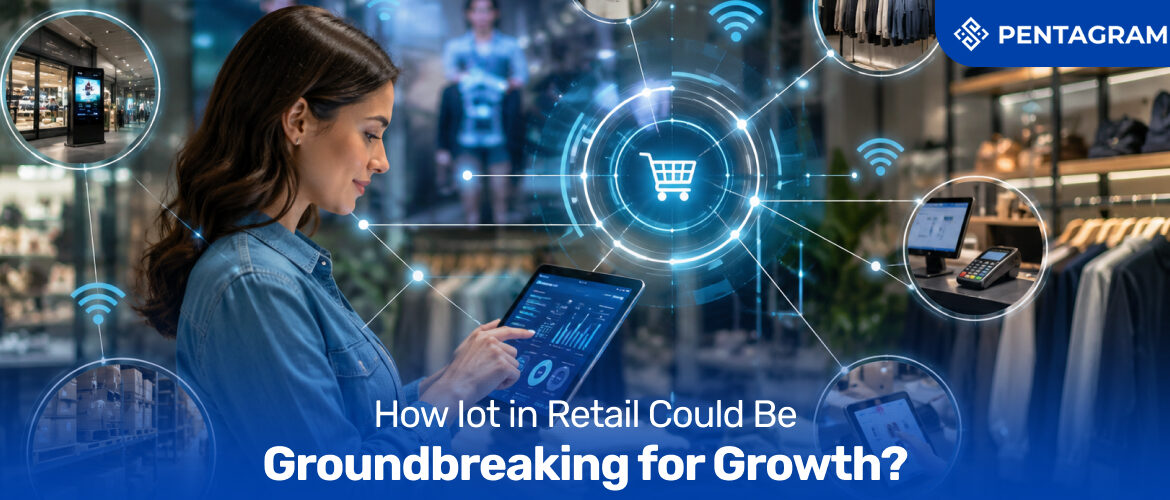
If you are asking what is IoT, then the answer is pretty simple, IoT, or the Internet of Things, refers to the vast network of physical devices, sensors, and embedded systems with digital intelligence that are able to collect, transmit, and simultaneously analyze data across networks spanning a variety of areas and sectors. Its application is simple but its effects are wide-spanning as it turns shelves into intelligent entities that connect and communicate with the master system through the use of sensors, cameras, and payment terminals.

For example: A customer is looking for a size 10 in black, and the product sits three aisles away, but this is just mere speculation on your part. In this scenario your POS system says it’s in stock somewhere while the inventory sheet says otherwise, and this dilemma might result in the loss of an essential sale.

With IoT, however, the product could become theoretically sentient with a simple RFID tag on it, such that the moment someone picks it up, moves it, or leaves it on the wrong shelf the system makes it known.

Essential Features of IoT in Retail

Benefits of IoT in retail can span multiple features to a retail store spanning not only the product inventory but also analyzing customer behavior and insights into the shelving of inventory for optimized sales and customer satisfaction.

  • Real-time inventory updates: RFID tags and weight sensors on smart shelves track stock levels instantly to prevent empty shelves. RFID tags attached to products can be read from distance, enabling automatic inventory tracking without line-of-sight requirements. Weight sensors on shelves detect product removal in real-time. Temperature and humidity sensors monitor conditions in storage areas and during transport.
  • Optimized cashierless checkout: Connected point-of-sale systems and sensor fusion allow automatic billing as shoppers leave as the price of the system is embedded, which just culminates according to the quantity and the brand of the product.
  • Instant pricing updates: Electronic shelf labels change prices wirelessly across the store in real time, thus making the hassle of repricing the entire stock list redundant; instead, a simple click on the integrated software could result in a calibrated change of price or quantity.
  • Supply chain tracking: GPS and environmental sensors monitor goods from warehouses to store floors ensuring the quality of the product and the efficiency with which the product is handled.
  • Proximity marketing: Bluetooth beacons send tailored deals and product guides straight to a shopper’s phone, which is significantly better than mass targeting advertisement blasts, as these specific customers have a history of previously shopping and thus are more susceptible to buying again.
  • In-store behavior tracking: Customer insights are obtained through heat maps and foot traffic captured by highly sensitive and efficient sensors. They show how customers move through and use store spaces. This allows the store to design its infrastructure and stock its inventory in such a way that the most demanded products are highlighted and the most visited aisles are separated from the maze.

What is the Internet of Things and its Relationship to Retail

What is Internet of Things? Is it the same as a connection hub or a modem that creates a local area network for technical devices in its ecosystem?

The Internet of People can also draw a similar comparison with what can be considered social media, where these nonliving entities somehow manage to converse with each other through the power provided to them by technology.

It can be considered a network of physical objects embedded with sensors, processors, and network interfaces that are remarkably capable of collecting, transmitting, and acting on data with a sentient intellect that makes caretaking of these products obsolete. Industry estimates now put the number of connected devices globally above 30 billion, with each shelf, terminal, delivery vehicle, and stockroom generating a continuous stream of operational data.

What is IoT technology is, answered functionally as the correction to the lag that retailers wouldn’t want between their sale, stocking, or stealing of the product and its subsequent update in the system, giving insights with such accuracy that a vigilant guard might have been standing above it.

Due to the lack of heterogeneity of systems in retail, it is often difficult to amalgamate the system with different products having different weights and RFIDs, and thus, this is precisely where most retail IoT initiatives stall. It is thus necessary to reconcile data across vendors, locations, and formats into something a business can actually act on. For retail operators evaluating IoT investment, this is the distinction worth understanding early: the technology itself is mature and inexpensive.

However, the conductor of this orchestra of devices is essential, and that solely depends on the depth of the architecture behind the system. This system is what IoT technologies provide; thus, the more reliable the provider of IoT and the whole server, the better resource management system you can uncover.

The Future of IoT in Retail

The next phase for the implementation of IoT in retail is about closing the loop between that visibility and action, with progressively less of a human standing in the middle to trigger it. Here’s the pathway that’s actually taking shape:

  • From reporting to resolving- IoT technologies are shifting from flagging problems to being tasked to act on them directly. This includes recurring but essential tasks like scheduling equipment maintenance before failure and rerouting stock between locations based on live demand signals.
  • Autonomous retail agents- Retailers now expect AI-driven agents and not just static dashboards, to be a genuine competitive requirement within the next few years, capable of acting on IoT connectivity data without waiting for manual sign-off
  • Battery-free sensing- Rollouts of ambient IoT sensors are proving that connected devices can now be deployed at a pallet-level or item-level scale, which was previously too cost-heavy due to the hassle of installation and repairing.

No surprises and No Alarms: Advocates Pentagram

Pentagram Systems is a leading enterprise connectivity solutions provider delivering comprehensive IoT in retail, along with mobile, cloud, and payment solutions to retail and other enterprises. With 15+ years of combined expertise, Pentagram specializes in enabling retail businesses to harness IoT technology through reliable global IoT connectivity, advanced SIM estate management, and integrated PoS solutions. Their enterprise-grade platform delivers 99.9% uptime across 40+ countries, supporting 500+ enterprise clients with dedicated 24/7 support.

Pentagram Systems brings all these elements together, offering retail enterprises a consolidated platform for IoT connectivity, device management, and integrated payment solutions. Their combination of global IoT infrastructure, eSIM management capabilities, and retail-specific solutions like PoS connectivity ensures that your IoT investments deliver maximum business value.

Frequently Asked Questions

Q1: What is IoT in retail, and how does it differ from traditional retail systems?

IoT in retail refers to internet-connected devices with sensors that collect, transmit, and analyze real-time data about inventory, customers, and store operations. Unlike traditional systems relying on manual processes and periodic reports, IoT enables continuous, automated monitoring. This real-time visibility allows retailers to make faster, more accurate decisions and respond immediately to changing conditions—something impossible with legacy systems.

Q2: How much does it cost to implement IoT in a retail environment?

IoT implementation costs vary significantly based on scope, scale, and existing infrastructure. Costs have decreased substantially as IoT hardware has become more affordable. Most retailers implement IoT progressively, starting with high-impact use cases like inventory management before expanding. The real expense isn’t hardware—it’s reliable connectivity infrastructure. Partnering with established IoT connectivity providers eliminates capital-intensive infrastructure investments by offering managed services models where you pay for connectivity and data, not infrastructure buildout.

Q3: What are the biggest security concerns with retail IoT deployments?

Data security and device security are paramount concerns. IoT devices create numerous entry points for potential breaches. Addressing this requires encrypted data transmission, secure device authentication, regular firmware updates, and strict access controls. Enterprise-grade IoT connectivity providers implement multiple layers of security, from device provisioning to data in transit to storage, ensuring retail operations remain protected while maximising the value of IoT data.

Is Visual IVR Better Than WebRTC? 1000 500 Pentagram Team

Is Visual IVR Better Than WebRTC?

In a blog post titled “Why Visual IVR is a Bad Idea,” the author argued that WebRTC is a better solution, describing it as an “embedded live help feature” that connects customers using a mobile app directly to an agent. They also suggested that using VoIP instead of the traditional Public Switched Telephone Network eliminates hold times and reduces costs. While that sounds appealing in theory, here’s why it falls short – and why Visual IVR remains the stronger choice for delivering real customer service at scale.

What Makes Visual IVR a Better Solution

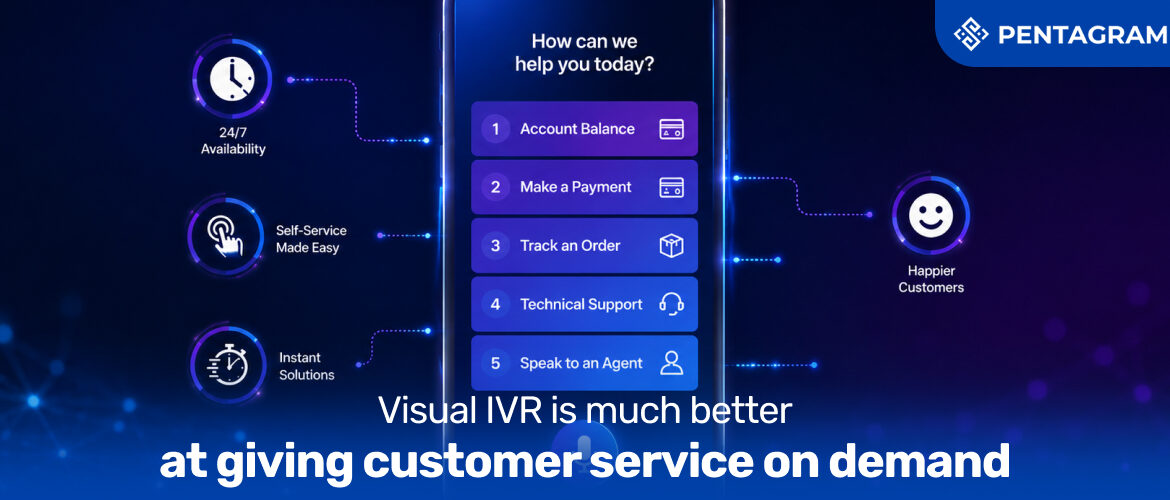
Visual Interactive Voice Response, or simply Visual IVR is built around a simple idea of giving customers the digital help they need – whenever and wherever they need it, all without requiring an agent. Rather than routing every interaction through a live representative, a Visual IVR solution empowers customers to help themselves and they will only connect them to an agent (with full context transfer) when genuinely necessary.

As an IVR service, it can be embedded directly into a website or mobile app without requiring a separate download. This makes it highly accessible from the moment a customer needs support. For any business that is looking to improve IVR customer experience – this flexibility sets it aparts from more rigid alternatives.

The Problem with WebRTC

The core issue with WebRTC as a customer service solution is that it makes too many assumptions about how a customer’s journey begins. It assumes that the customer will always start their journey on a company’s website or mobile app. But that’s rarely how it works in practice.

Let’s say your cable goes out in the middle of a show – the first instinct isn’t to open an app or navigate to a website, as both of these options assume you’ve already set up an account. You also have to remember your login details on the spot. If a monitor that you bought six months ago stops working, there’s no app that will tell you whether it’s still under warranty or walk you through ordering a replacement.

These are simple examples, but they all make an important point: many of the reasons a customer reaches out for help have nothing to do with a website or mobile app experience. WebRTC doesn’t account for that. Its goal is simply to connect you to an agent when something goes wrong on a digital platform, which assumes that every customer interaction requires a human on the other end.

Addressing the Critics: Why Visual IVR Is Here to Stay

The author of the article in question raised several objections to Visual IVR. One of them is that the “IVR” in the name carries a negative connotation – that it reflects a “technology-first, not customer-first: mindset. They said it’s merely a stopgap solution, but most of these arguments don’t hold up. Here’s why:

On the Name

It’s fair to say the name “Visual IVR” is limiting. When the technology first emerged, it was primarily a way to add a visual layer to an existing interactive voice response system – letting customers see menu options rather than listening to a long recorded list. That alone was a meaningful improvement. Instead of sitting through “press one for technical support, press two for billing,” customers could view all options at once and tap or click to navigate.

This simple shift eliminated a surprising number of common frustrations: choosing the wrong option, missing options entirely, or giving up and pressing zero to reach an operator. The result was better routing and fewer drop-offs.

On the Technology

But Visual IVR has evolved well beyond its origins. Today’s digital IVR solutions do far more than dress up an existing system. They enable genuine self-service – giving customers access to guided troubleshooting, instructional images, step-by-step video walkthroughs, and more.

Take the cable TV example again. With a Visual IVR solution, a customer whose service has gone out can be walked through a reset process with clear visuals, without ever speaking to an agent. If self-service doesn’t resolve the issue, the customer can be transferred via callback, queue, or chat and the agent receives full context on every step the customer has already attempted. This removes the need to repeat information and allows the agent to move straight to finding a solution.
>Businesses working with a dedicated IVR service provider can also customise these flows extensively — tailoring the experience to their specific customer journeys, industries, and support needs.

On ROI

The results speak for themselves. Organisations implementing Visual IVR are seeing significant reductions in call volumes, as more interactions are resolved digitally before they ever reach the call centre. For those who do escalate to an agent, handle times are considerably lower because the groundwork has already been done. Many businesses report a measurable return on investment within just a few weeks of deployment.

Visual IVR Was Designed With the IVR Customer Experience in Mind

Almost every organisation with a customer service operation has some form of interactive voice response system in place. The value of routing customers to the right agent quickly is well understood. The problem is that traditional IVR doesn’t always deliver on that promise – customers zero out in frustration, struggle with touchtone inputs, or fail to get the help they actually need.

This leaves customers frustrated and erodes trust in the technology. But the solution isn’t to abandon the system entirely – it’s to make it work better. Visual IVR does exactly that. It takes a channel customers are already familiar with and transforms it into a smarter, more intuitive experience that genuinely puts their needs first.

Visual IVR: The Smarter Way Forward for Support

Customers still rely on support hotlines when they need help. Meeting them in a system they already know – one that’s been upgraded to actually serve them – is a far better approach than assuming they’ll always start their journey on your app or website. That’s the real promise of Visual Interactive Voice Response done right: less friction, faster resolution, and a better experience at every touchpoint.

How Cloud Services Play a Critical Role in Digital Transformation 1000 519 Pentagram Team

How Cloud Services Play a Critical Role in Digital Transformation

Many businesses today are under pressure to move faster, work smarter, and do a lot more with ‘less’. Because of this reason, cloud storage services have become central to how many organisations respond to that pressure. It gives them the tools to store, process, and analyse data without the limitations of on-site infrastructure. In fact, adopting cloud services has become a core part of many organisations’ digital transformation strategy.

Growth Without the Upfront Cost

The most immediate benefits of business cloud solutions are possibly the ability to grow without incurring any upfront costs. Businesses don’t have to invest in physical hardware that may become outdated later on. They can simply grow their storage, computing and networking resources up or down as their needs change.

This ‘pay-as-you-go’ model means that organisations only need to spend on what they actually use – nothing more. For SMEs, this removes the need for large and expensive capital investments and makes quality infrastructure accessible – something which was not possible before cloud service providers came into the wider market.

Access from Anywhere, at Any Time

Cloud storage services allow your employees to access data and applications from anywhere as long as they have an active internet connection. This gives maximum flexibility to employees, which is essential for modern businesses, particularly as remote and hybrid working models are on the rise.

Unlike the old ways of being tied to a physical office or a specific device, teams can collaborate and, in real time, access files they need and stay productive wherever they are in the world.

Security That Grows With Your Business

A common concern businesses have about moving to the cloud is security. But in reality, cloud service providers invest very heavily in security. For SMEs, the level of security that comes with cloud solutions would be difficult and costly to replicate on their own.

How cloud services remain secure typically involves encryption, firewalls, intrusion detection systems and ongoing monitoring – which are all managed and updated by the provider. This means any businesses don’t have to rely on internal IT teams to manage security across old hardware – resulting in a more secure environment than what an organisation could achieve independently.

Better Data Management and Decision Making

Storing data through cloud storage services also opens the door to better data management and analytics. When data is centralised and accessible in the cloud, businesses can more easily gather, process, and analyse large volumes of it – something that’s increasingly important as the amount of data companies generate continues to grow.

Many IT cloud services also come with built-in analytics tools, making it easier for businesses to gain insights without needing specialist technical knowledge. Better data access leads to better-informed decisions – and in competitive markets, that kind of clarity can make a real difference.

Cloud Solutions Are No Longer Optional for Data-Driven Companies

The shift towards cloud adoption isn’t slowing down. As part of a broader digital transformation, businesses of all sizes are moving their data, applications, and workflows to the cloud – and for good reason. Because of this, Pentagram aims to help businesses within the UK with unlimited cloud storage options, flexible pricing, and a growing ecosystem of integrated tools, meaning there’s rarely a reason not to adopt it.

For businesses that haven’t yet made the move, or are only partially there, the question is no longer whether to adopt cloud storage services – it’s how to do it in a way that works for their specific needs, budget, and growth plans.

If you’d like to explore what cloud services could look like for your business, get in touch with our team at sales@pentagramsystems.co.uk. We’ll help you find the right solution.

eSIM Services: A Revolution in the World of Telecom 1000 656 Pentagram Team

eSIM Services: A Revolution in the World of Telecom

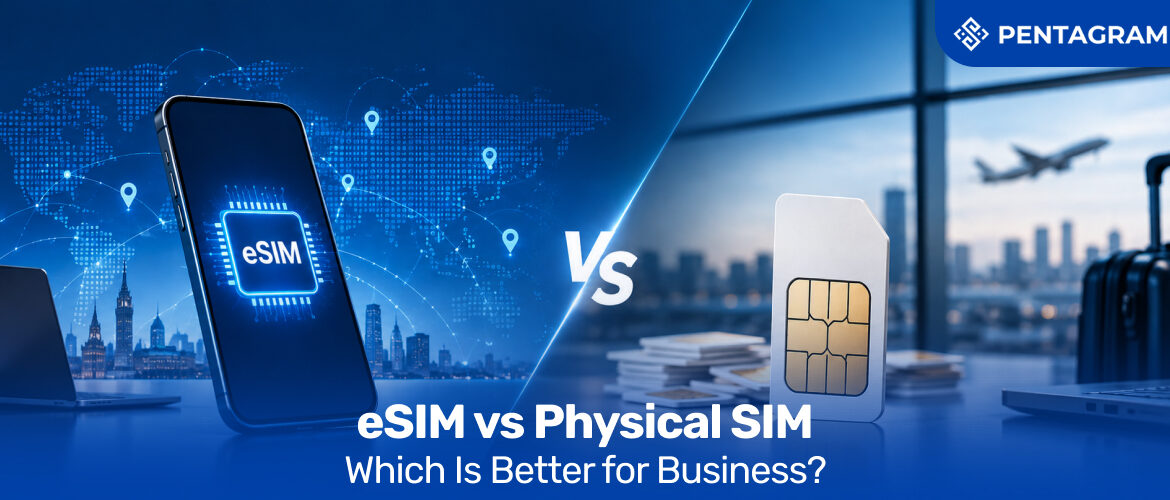
How mobile connectivity is implemented is changing fast- and eSIM services are at the centre of this change. Unlike traditional SIM cards, which are physical – and need to be manually swapped when changing mobile network providers, eSIMs are entirely virtual. This means users can switch, activate, and use without ever visiting a store.

Pentagram, through its dedicated eSIM platform eSIM Cards UK, brings these capabilities directly to individuals across the UK and beyond – offering flexible eSIM plans backed by global network coverage.

Here’s why eSIM are quickly becoming the standard – and what to look for when choosing the best eSIM provider for your needs.

Simple Management for a World of Connected Devices

As the number of connected devices continues to grow, managing mobile connectivity at volume becomes more and more complex. But with eSIM tech, it is simplified considerably. Businesses can easily add or remove mobile network profiles across multiple devices over the air. And with the absence of physical SIM cards, operational and logistical costs are reduced.

For enterprises that are managing IoT deployments, vehicle fleets, or a large number of employee devices, this kind of centralised control is a game-changer. No need to coordinate physical SIM swaps across locations, and everything can be handled remotely.

Flexibility in Device Design

eSIMs mean they are embedded directly into a device at the point of manufacture. Because of it, they take up far less physical space than a traditional SIM card, which comes in the form of a plastic chip. As eSIMs plans are virtual, it opens up a whole world of possibilities for device manufacturers and brands – particularly for the ones in the wearable and IoT space, where compact form and durability are essential.

For the end users, this means they have access to greater functionality packed into smaller, sleeker devices. And for businesses, they can deploy hardware at a huge volume with even fewer physical components to manage. Plus, more flexibility when sourcing devices.

Local Presence Across Multiple Locations

One of the more overlooked benefits of eSIM services is their ability to maintain a local presence in multiple countries. With the right eSIM plans, any business that operates internationally or has a team that travels frequently can assign a virtual phone number from different regions or – even better – global numbers to their employees.

For travellers, this also eliminates the need to repeatedly purchase local SIM cards at every new destination or deal with expensive roaming charges.

Built-In Security

For businesses that deal with sensitive data, security is a main concern for now – especially when they also manage a number of connected devices. Physical SIMs are susceptible to scams like the SIM Swap, or they can be stolen/damaged. But with eSIMs, they come with better security features and protect against unauthorised access and tampering. Profiles can be managed and authenticated remotely through an encrypted channel, and the risks are significantly reduced.

If your business handles sensitive and critical data across a number of devices, this level of built-in protection is valuable and should be taken into consideration when evaluating some of the best eSIM providers available.

Remote Management at Scale

Perhaps one of the most practical advantages of eSIM services for businesses is remote management. Activating, deactivating, or updating SIM profiles across hundreds or thousands of devices can be done centrally, without any physical intervention. This is valuable for businesses with distributed teams, remote equipment, or IoT devices deployed across multiple sites.

The ability to manage connectivity remotely reduces downtime, cuts IT overhead, and gives businesses far greater control over their connected estate.

Seamless International Connectivity

For businesses and individuals that travel internationally, eSIM services remove one of the most persistent frustrations of global connectivity — the physical SIM swap. Rather than sourcing a new SIM card at each destination or paying steep roaming fees, users can switch to a local network profile instantly.

Finding the best eSIM plans for international use means looking for providers that offer broad network coverage, transparent pricing, and easy profile switching — all of which the right eSIM service provider should be able to deliver as standard.

Growing Global Availability

eSIM adoption is accelerating worldwide. As more devices ship with eSIM capability and more network operators support the technology, the global ecosystem is maturing quickly. This means businesses and individuals can increasingly rely on eSIM services regardless of where they’re based or where they operate – with a more consistent experience and more choice when it comes to selecting eSIM plans.

Choosing the Right eSIM Service Provider

As eSIM tech becomes widely adopted, the number of providers entering the market also grows. When evaluating your options, it’s worth considering coverage, plan flexibility, remote management capabilities and security standards – with a support team you can count on.

Whether you’re an individual looking for the best eSIM plans for travel or a business looking to deploy eSIM services – working with an experienced provider can make all the difference.

You can visit our eSIM website at esimcards.co.uk to explore the list of available plans or get in touch with the Pentagram team directly at sales@pentagramsystems.co.uk to find out how we can support your business connectivity needs.

The World of IoT and Its Potential Is Skyrocketing  1000 565 Pentagram Team

The World of IoT and Its Potential Is Skyrocketing 

The Internet of Things has moved well beyond being in a ‘buzzword’ territory. Today, IoT services are actively transforming how businesses operate. Different devices, machines and systems are connected in a way to generate real, measurable value – and the ability to connect and communicate across physical infrastructures is opening up many opportunities that didn’t exist a decade ago.|

Let’s take a look at where IoT for businesses is making the biggest impact and why it is the perfect time now to pay attention to it.

Real-Time Data That Drives Better Decisions

At the core of any IoT system is data. By connecting sensors, cameras and devices to a central IoT system – businesses can continuously gather information. They gain insight into machine performance, energy usage, environmental conditions, customer behaviour, etc.

The real value isn’t just in collecting data, though – but in what you do with it. IoT solutions give businesses the ability to analyse data in real time and surface meaningful insights – thereby acting on them quickly. This results in smarter and faster decision-making across many parts of the operation.

Transforming Manufacturing and Production

One of the most established use cases for IoT services is in the manufacturing business. The connected sensors on production lines can monitor performance of the machines, track energy consumption, and flag issues quickly.

Such visibility allows manufacturers to effectively identify bottlenecks, reduce waste and keep production running. And when anything goes wrong, the IoT system will be able to catch it early and minimise disruption.

Predictive Maintenance – Fixing Problems Before They Happen

When any operations-heavy business goes town, it could be costly. But IoT services are changing unplanned downtime through predictive maintenance. With IoT systems in place, they can continuously monitor the conditions of machines and equipment and identify signs of wear and tear before they become a problem.

Manufacturers don’t have to wait for something to break or do fixed maintenance anymore. They can schedule interventions only when needed, quickly and effectively – reducing downtimes and extending the life of equipment.

Logistics and Supply Chain Visibility

In the field of logistics, IoT infrastructure allows businesses to maintain visibility over their supply chains. The connected IoT devices on vehicles, cargo, shipping containers, etc., can provide real-time location data and help companies optimise routes and improve delivery times. This also reduces the risk of theft or damage during transit – greatly reducing another logistics headache.

Enhanced Security for Buildings and Sites

IoT systems also play an important role in physical security. Smart cameras, connected door locks, motion sensors and access control systems can all be integrated into a single IoT platform. This gives businesses real-time monitoring and control over who enters, uses, accesses, and when.

For businesses who operates in multiple sites or organisations managing large facilities – centralised IoT-based security management is far more efficient and responsive than traditional approaches.

Improving the Customer Experience

Beyond just the operations and infrastructure, IoT for businesses is also being used to create a more personalised, responsive customer experience. Smart displays, connected point-of-sale systems and in-store sensors can track customers’ behaviour and movement. This allows retailers and hospitality businesses to deliver targeted offers, reduce wait times and tailor the experience in real time.

As customer expectations rise, businesses that use IoT solutions to better understand and respond to their customers will have a clear advantage over those that don’t.

Building the Right IoT Infrastructure

The potential of IoT is pretty clear now, but realising that potential? It all depends on having the right IoT infrastructure in place. That means having reliable connectivity, secure device management, and data handling with the right support to keep everything running smoothly.

Whether you’re exploring IoT services or looking to expand an existing deployment, working with the right partner can make all the difference. Pentagram offers managed IoT connectivity solutions that are designed for businesses of all sizes

Get in touch with our team at sales@pentagramsystems.co.uk to find out how we can help your business make the most of IoT.